Network

Copyright Enforcement Policy

Resources for:
icon Close

Fairleigh Dickinson University vigorously enforces United States copyright law. When utilizing the FDU Local Area Network or FDU provided Internet Access, you are required to adhere to all existing US copyright laws.

To view the full statement of law, please visit:

Failure to comply with this document can result in FDU disciplinary action as well as civil and criminal penalties.

Last Modified:

Home/Department Shared Drive Quota Limit Email

Resources for:
icon Close

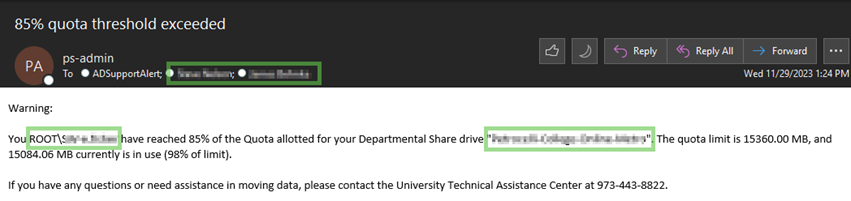
Home drives and departmental shared drives come with a limited capacity of data storage, known as a quota. When a drive reaches 85% of that quota, both the departmental shared drive manager as well as the user uploading the content that puts a drive over that threshold will receive a message from psadmin@fdu.edu as seen below.

By informing the share manager and providing the name of the share affected, the share manager has an opportunity to respond to the notification prior to any disruptions to day-to-day workflows.

Upon receiving this email, the share owner should:

  1. Review and confirm that all uploaded content is required for current business purposes
  2. Review and consolidate any duplicated items
  3. Remove any documents, files, or pictures no longer needed

Note

Shared drives are not intended for archival purposes. We ask that the share manager please remove documents, files or pictures that are no longer actively required.

These measures will resolve most shared drive quota issues. If the shared drive is still nearing its storage quota, please fill out the Home/Department Share Management Form using the link below:

Home/Department Share Management Form

Last Modified:

Setting up and Accessing the FDU VPN Client

Resources for:
icon Close
Download and Install The FDU VPN Client

FDU’s VPN Client Software, is also known as the “Cisco AnyConnect Secure Mobility Client”.

  1. Use any web browser (Google Chrome, Mozilla Firefox, Safari) to navigate to vpn.fdu.edu. Please refrain from using the Internet Explorer web browser when installing the FDU VPN Client
  1. Select your role within the University from the Group pulldown menu and enter your NetID Information in the username and password fields (user@fdu.edu)
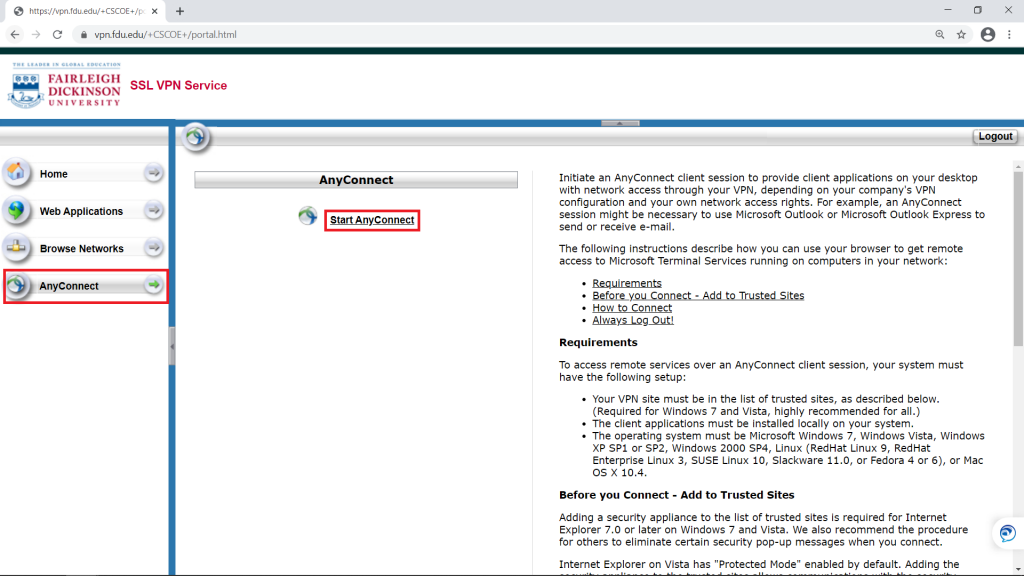
  1. On the left-hand side menu, click on “AnyConnect“, then click on “Start AnyConnect”
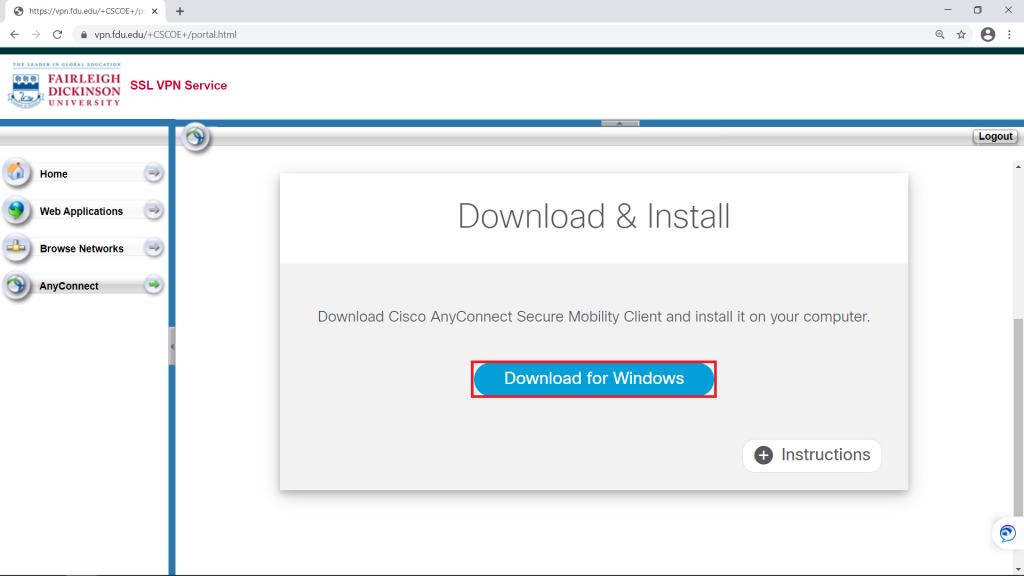
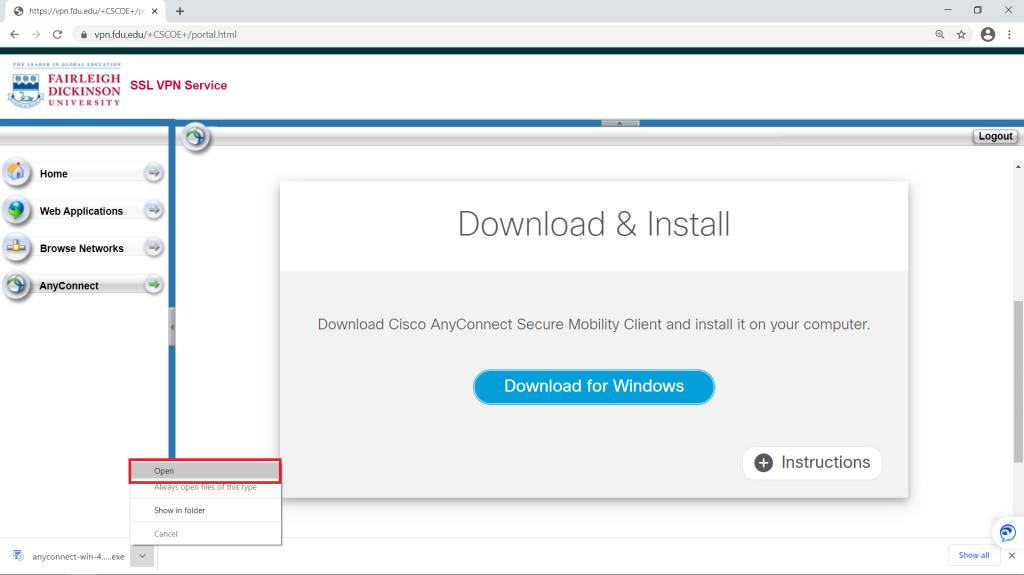
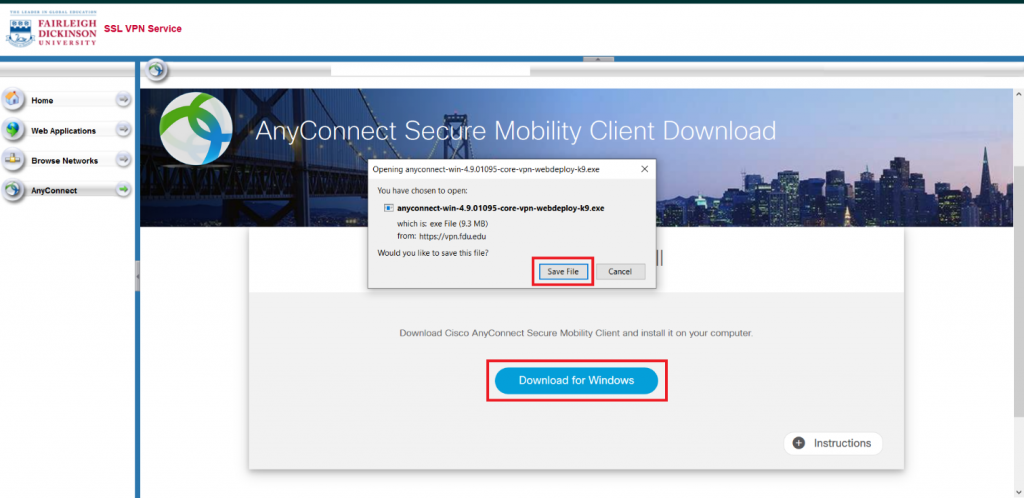
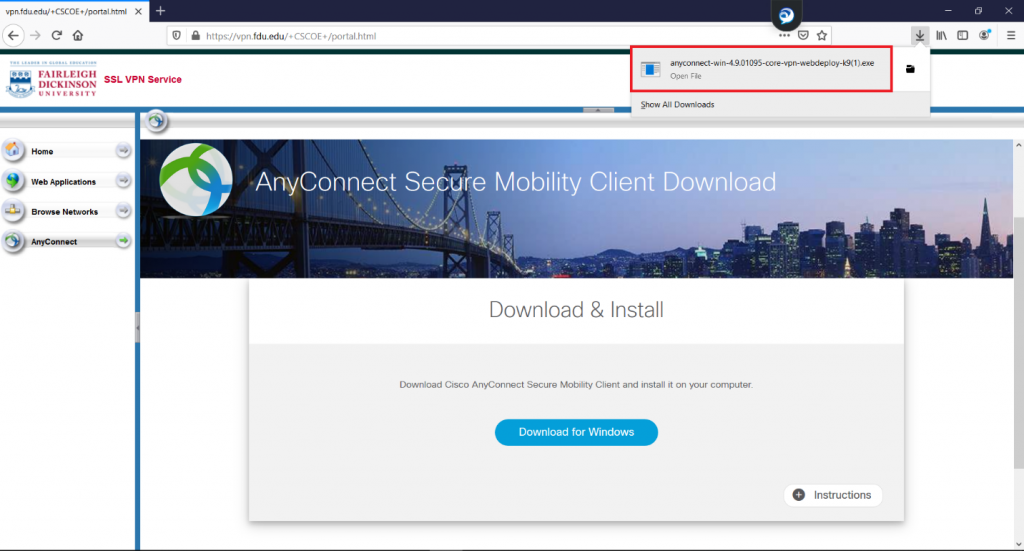
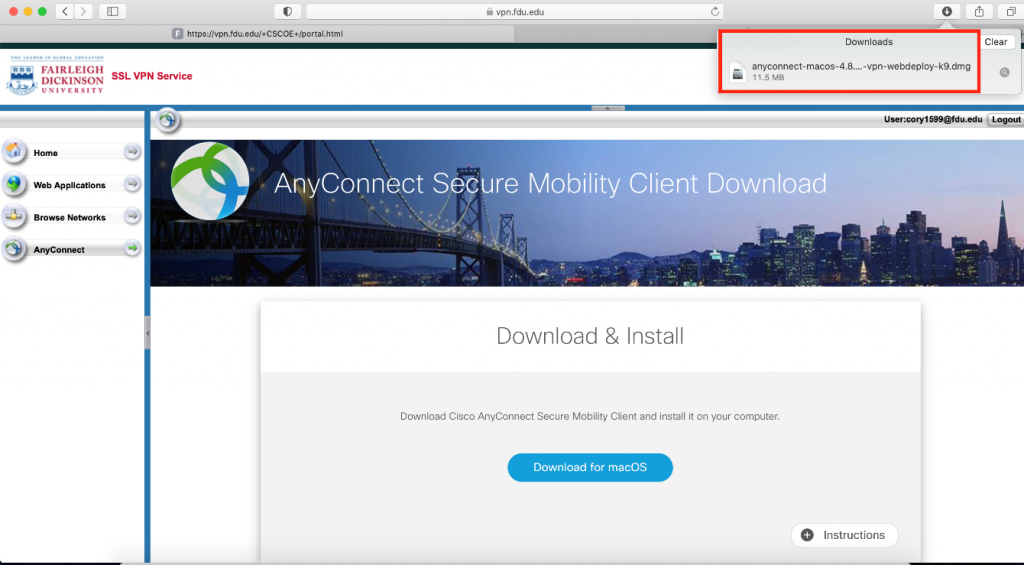
  1. Download the VPN applet by clicking on “Download for Windows” or “Download for macOS” depending on your operating system. The browser will then download the VPN software client. When finished downloading, click on the file and select “open” within your browser

Chrome

Firefox

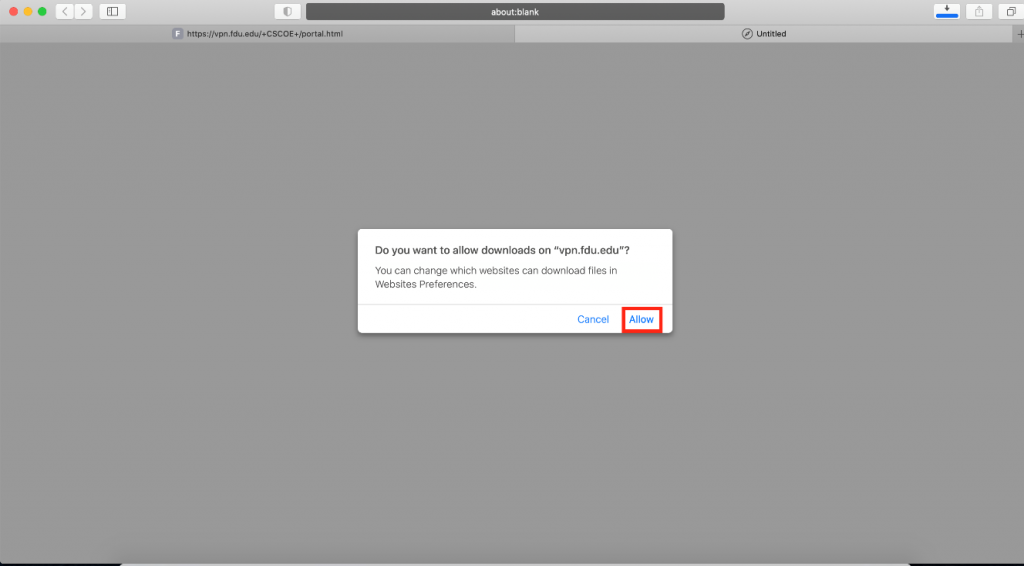
Safari

The browser will open a new window asking for permission to download the applet, click on “Allow”. When finished downloading, double click on the file to open the installation package and start the installation process.

  1. Follow the steps prompted to accept all changes and grant requested permissions to install FDU VPN software. Note, Java Runtime Environment software may also need to be installed. A copy of the software download will be prompted to be installed or can be accessed using the link below:
  1. The installation will continue, and an icon for the “Cisco AnyConnect Secure Mobility Client” with a “lock” icon will appear in your system tray once the installation is complete
close
Configuring The FDU VPN
  1. Log into your computer
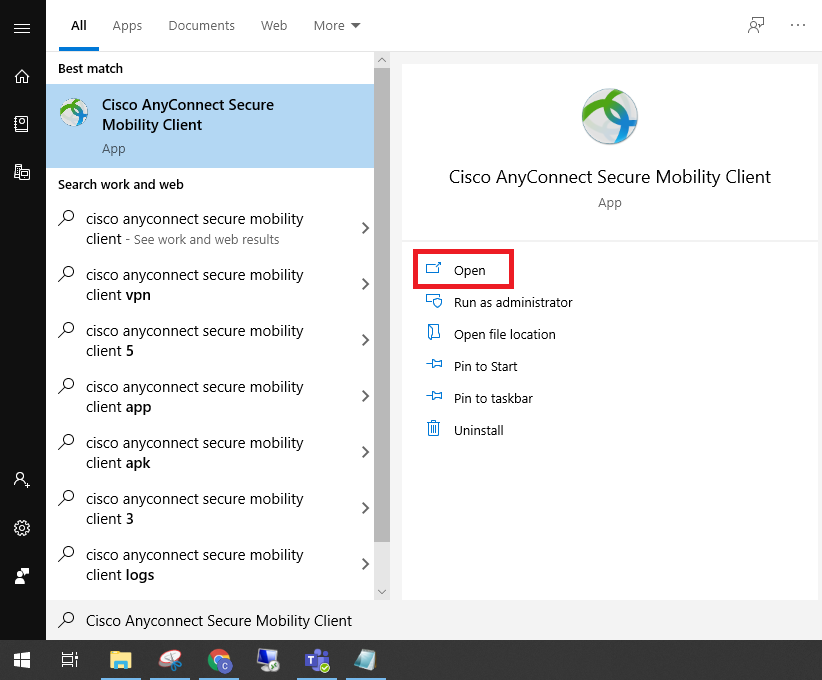
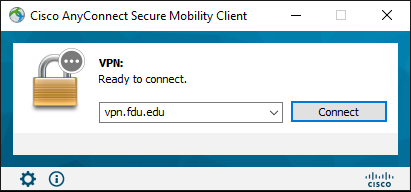
  1. Launch the Cisco AnyConnect Secure Mobility Client from the Start Menu. Ensure the address “vpn.fdu.edu” is entered into the corresponding text box and then press the “Connect” button
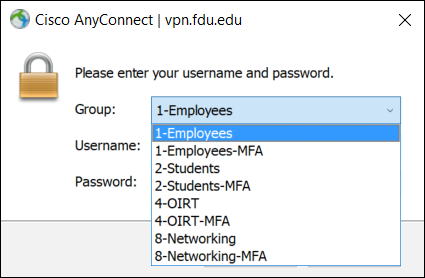
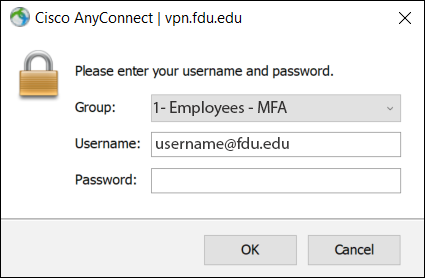
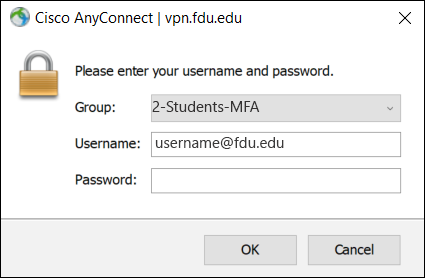
  1. Select your correct Group name on the dropdown menu, then enter your FDU NetID username and current FDU NetID password in the corresponding boxes. Click “OK“
Dropdown Options
Example for Employees
Example for Students
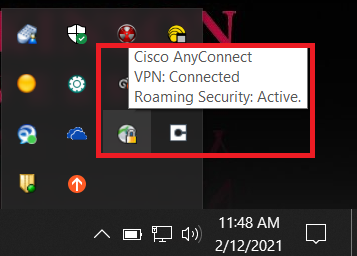
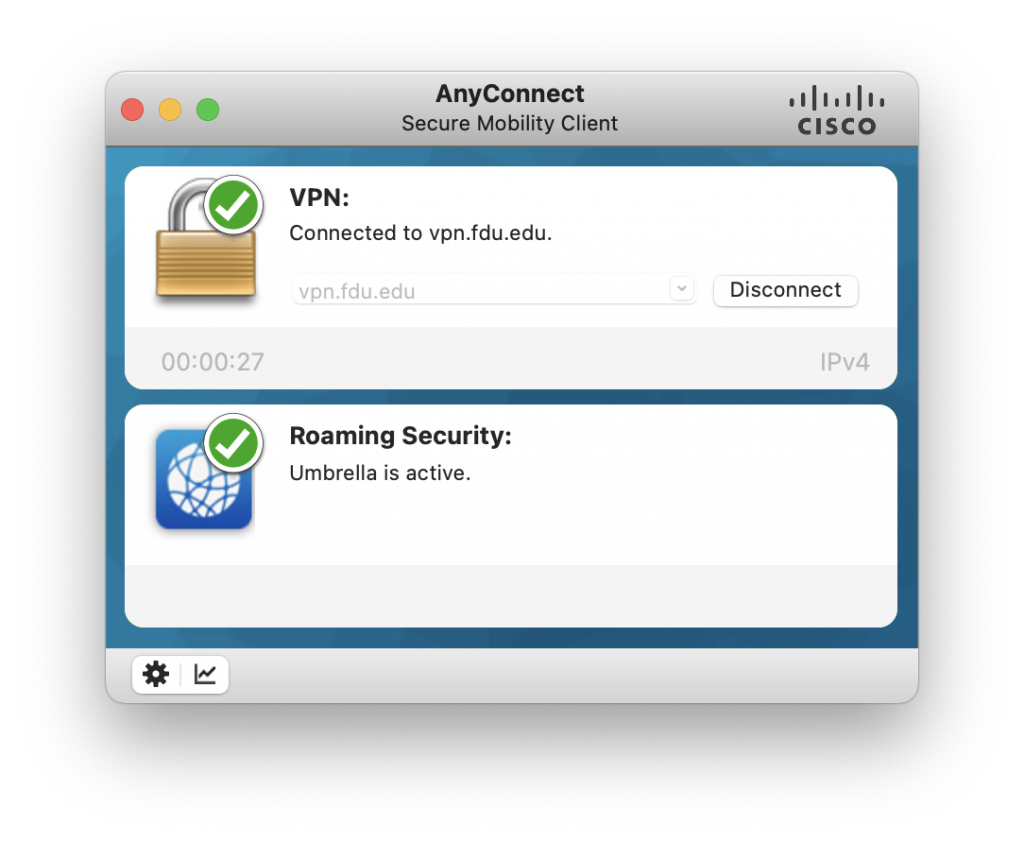
  1. Ensure a successful connection was made by checking on your system tray at the bottom right portion of your screen, or if on macOS, the client application window will display a screen check over the lock icon
Windows
macOS
close
Logging into The FDU VPN

The following instructions are the same for both Windows and macOS users.

  1. Register with Duo MFA
  • If you are an existing Duo user, please skip to Step 2
  • For new Duo users, please follow the guide below for registering your DUO Account
  1. Launch the “Cisco AnyConnect Secure Mobility Client” from the Start Menu or your Mac’s application folder if on macOS
  1. Ensure the address “vpn.fdu.edu” is entered into the corresponding text box and then click the “Connect” button
  1. Select your correct Group name on the dropdown menu
  1. Enter your FDU NetID username and current FDU NetID password in the corresponding boxes. Click “OK”
Example for Employees
Example for Students
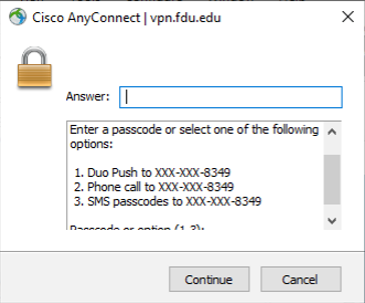
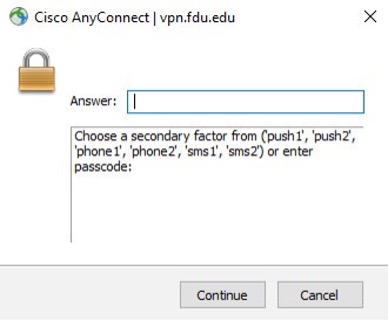
  1. In response, you’ll receive the Duo challenge dialog box. To use the preferred method type push in the Answer: dialog box, then click “Continue“
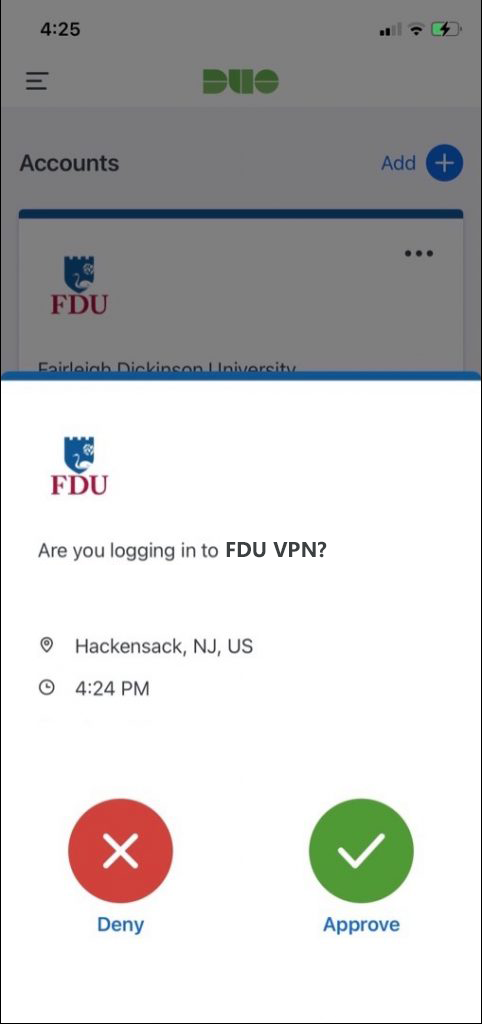
  1. Tap “Approve” on the Duo login request received at your phone
  1. Ensure a successful connection was made by checking on your system tray at the bottom right portion of your screen, or if on macOS, the client application window will display a screen check over the lock icon
Windows
macOS

Additional DUO Information

Users with multiple registered Duo devices will need to enter push1 for their primary device or push2 for their backup device. If you are unsure which device is your primary or secondary device, open the Duo Mobile app on your mobile device, click Fairleigh Dickinson University and enter the passcode displayed.

Additional DUO Authentication Options

TypeInstructions
Push (Preferred)Push a login request to your phone (if you have Duo Mobile installed and activated on your iOS or Android device). Review the request and tap “Approve” to log in.
PasscodeOpen the Duo Mobile App. Tap “Fairleigh Dickinson University” and the passcode will be displayed, or contact the SAMI Service Desk for a passcode.
PhoneHave Duo call your phone to authenticate your login.(Users with multiple devices will need to include a number indicating desired device i.e. Phone2). This option is only available to Faculty, Staff and approved Students.
SMSHave Duo text a passcode to your phone. (Users with multiple devices will need to include a number indicating desired device i.e. SMS2).

NOTE: This option is only available to Faculty, Staff and approved Students.

Additional Resources for Cisco DUO

close
Last Modified:

Wired Network Requirements for Labs, Desktops, and Digital Displays

Resources for:
icon Close

Computing equipment in University computer labs, desktop computers assigned to employees or student workers, and all digital displays must connect to the FDU network through a wired (Ethernet) connection. This requirement applies across all departments and campuses. Laptop computers are not covered by this policy.

Why Wired Ethernet Is Required

University computer labs are provisioned for wired connectivity. Consistent performance and dedicated bandwidth help maintain standard system images, deliver software updates and security patches, and support sustained data transfers. Wireless connectivity does not meet these requirements for lab and desktop environments.

Wired and Wireless Connections

Wired Ethernet

A wired connection uses a physical Ethernet cable to connect a device to the network through a switch or router, which provides access to the internet.

Advantages

  • Typically faster and more consistent speeds.
  • Lower latency, which benefits real-time applications.
  • A wired connection is generally more secure because it is harder to intercept.
  • Unaffected by Wi-Fi congestion or radio interference.
  • Reliable for large file transfers and critical systems.

Tradeoffs

  • Requires physical cabling and is less flexible.
  • Cabling, labor, and infrastructure can make installation more costly.
  • Less convenient for mobile devices.
  • Equipment can be harder to move or reconfigure.

Wireless (Wi-Fi)

A wireless connection uses radio waves (Wi-Fi) to connect devices through a wireless access point to the network. These devices include laptops, phones, tablets, and Internet of Things (IoT) equipment.

Advantages

  • Mobility and flexibility within Wi-Fi range.
  • Can be easier to set up and expand.
  • No cable is needed at each device, reducing clutter.
  • Supports phones, tablets, laptops, and IoT devices.
  • Useful for guest access and temporary setups.

Tradeoffs

  • Speeds can be slower than wired connections and vary with the Wi-Fi standard and network load.
  • Higher latency can affect real-time applications.
  • Other devices and walls can interfere with a Wi-Fi connection.
  • Wireless connections can be less secure and more susceptible to eavesdropping if not properly secured.
  • Signal strength can vary with distance, creating weak-signal areas or dead zones.

Choosing the Right Connection

Wired is best when maximum speed, reliability, and security matter, especially for critical systems, large file transfers, and fixed workstations.

Wireless is best when mobility, flexibility, and convenience matter, especially for mobile devices, guests, temporary setups, and areas where running cables is impractical.

The Bottom Line

Both wired and wireless connections have a place. Modern networks often combine them to balance speed, security, flexibility, and coverage. At FDU, this general comparison does not change the requirement for labs, desktop computers, and digital displays covered by this policy: they must use wired Ethernet.

Requirements

  • Connect all lab computing equipment, including workstations, printers, and peripherals that require network access, through wired Ethernet.
  • Connect all desktop computers assigned to employees or student workers through wired Ethernet, regardless of location.
  • Connect all digital displays, including monitors in common areas, classrooms, and athletic venues, through wired Ethernet. Any ancillary device that requires internet access must also use a wired connection.
  • Do not use wireless connectivity in place of a required wired connection.

Exceptions

Any deviation, including a request to design or configure a lab or desktop environment for wireless connectivity, requires prior written approval from the Associate Vice President of Systems and Networking. Do not proceed with a wireless design or implementation until that approval is granted.

Cost of a Data Jack

The requesting department is responsible for the cost of providing an Ethernet data jack for an individual workstation.

Last Modified: